Blog
Loading...
Blog

Kymrun Dhami,
Improving social mobility for underrepresented groups is complex. An individual’s prospects are shaped by a range of intersecting and changing factors, while limited resources mean organisations must use creative and innovative approaches to reach those who could benefit most.
So how might this be approached?
Collaboration is one example of how organisations can come together to tackle challenges that would be difficult to address alone. Combining expertise, evidence, networks and resources, creates space to share best practice, test ideas openly and build stronger, more ambitious initiatives.
This can take many forms, such as joint funding, sharing delivery capacity, combining knowledge and widening networks. When done well, collaboration can increase a programme’s reach, strengthen its credibility and reduce duplication. It brings together different perspectives, helping to ensure programmes are better informed, more inclusive and more responsive to the barriers faced by underrepresented groups.
The IntoTech Programme
This spirit of collaboration sits at the heart of the IntoTech Programme. The Hg Foundation has partnered with Futures For All to co-fund the new tech initiative that will help UK state school students explore and access pathways into tech careers. The programme brings together expertise from both organisations, alongside delivery and evaluation partners: National Foundation for Educational Research (NFER), ImpactEd Education and Brightside.
The UK technology sector employs over 2.2 million people, yet it has a highly unequal workforce: just 9% of workers come from lower socio-economic backgrounds, and only 22% of tech specialists are women. Over the next four years, the IntoTech programme will address this inequality, reaching around 16,000 young people - with a particular focus on girls and those from underprivileged backgrounds - creating pathways into tech that are grounded in robust evidence of what works.
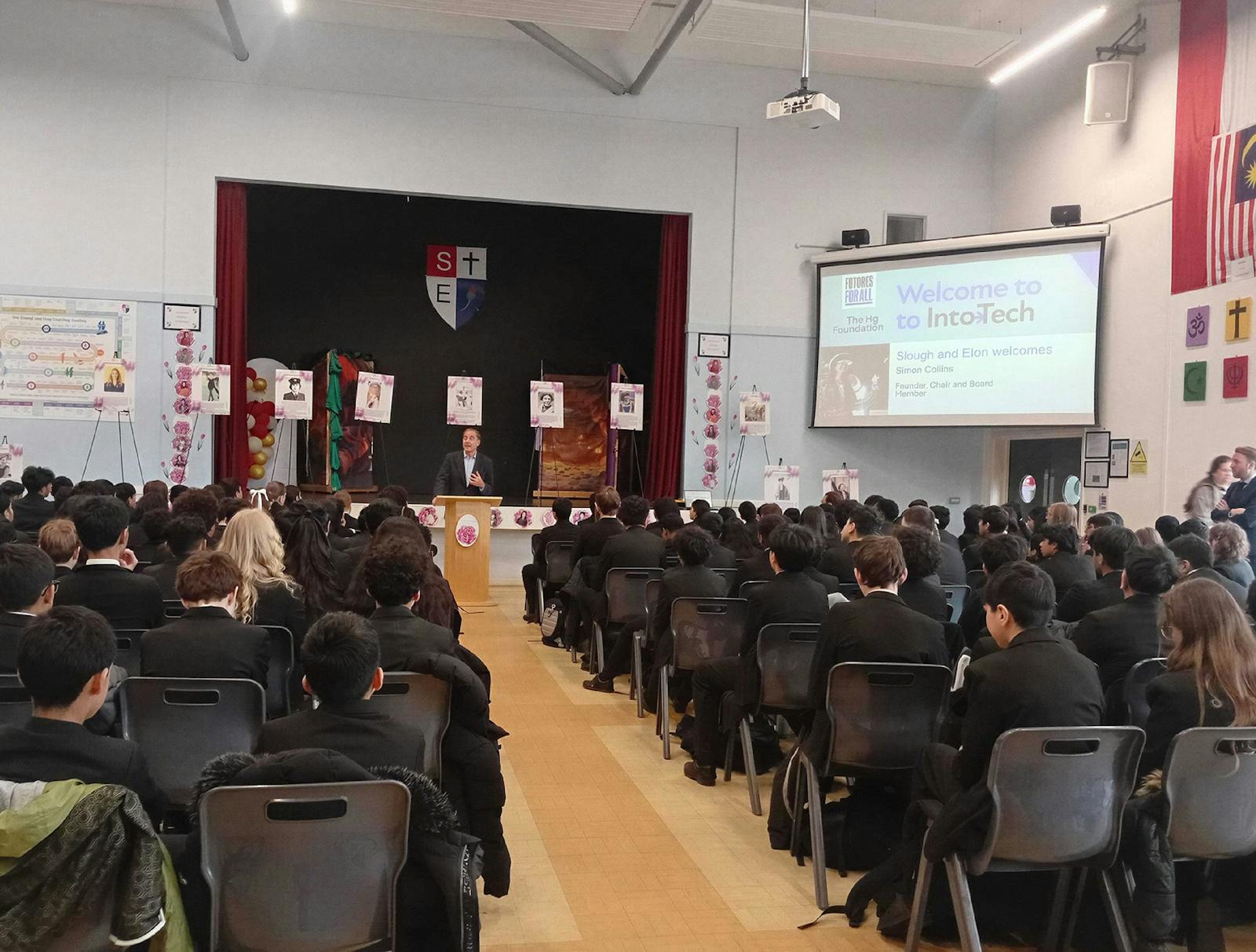
Over several years, IntoTech will showcase tech careers to around 16,000 students across the UK, creating 36,000 opportunities through inspirational talks, insight days, work experience and mentoring. The goal is to help young people decide for themselves whether a career in tech is right for them, giving them the tools and confidence to navigate this pathway if they choose to pursue it.
IntoTech’s model builds on Futures For All’s existing work, including its successful Speakers For Schools and Work Experience strands. Since our first meeting in late 2023, the organisations have worked closely to shape the direction of the programme, with more than 120 meetings and countless email exchanges to date. Throughout, it has been clear that we share the same mission: to support work that delivers meaningful impact. Setting up a programme of this scale and quality is not easy, but that shared goal has fuelled IntoTech’s development, helping us to overcome hurdles and support a successful pilot ahead of the full-scale launch.
A key part of this has been establishing an independent impact evaluation with NFER and ImpactEd. The accompanying Randomised Controlled Trial will robustly assess whether the structured intervention improves participants’ knowledge, attitudes, behaviours and perceptions of tech careers compared with a control group. The evaluation will also use our validated Tech Career Survey to collect and measure self-reported insights from students.
Launch Event
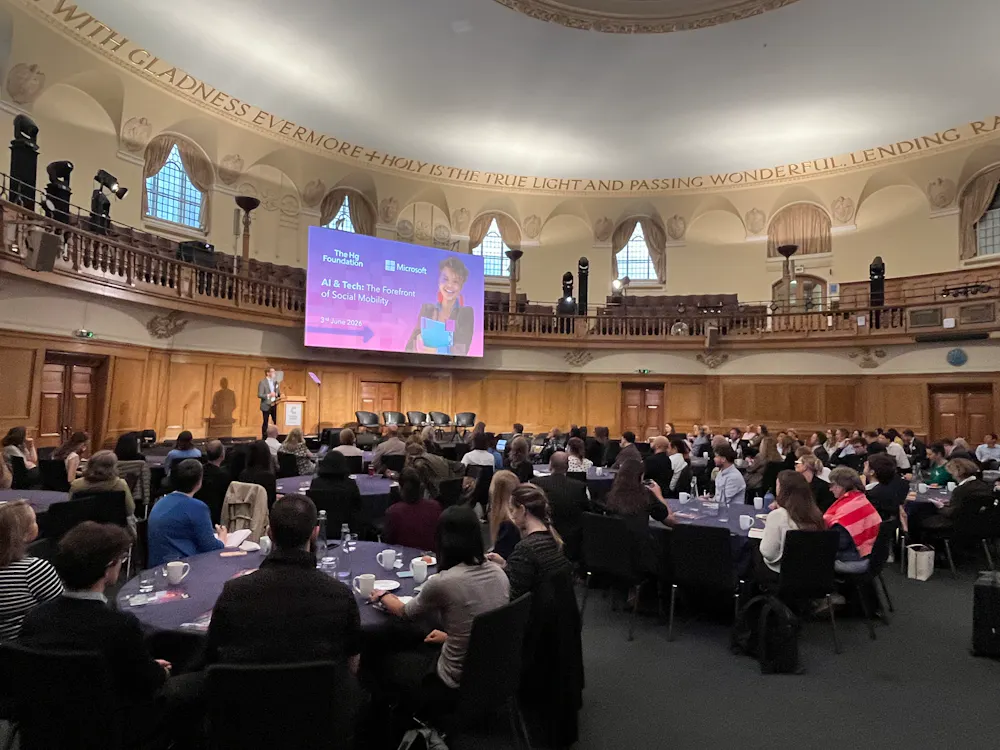
After two and a half years of hard work, it was fantastic to celebrate the official launch of IntoTech on Tuesday 30 June at Vintners’ Hall. The event brought together leaders and colleagues from across education and technology for thoughtful discussions about the challenges facing young people and the tech sector today, particularly in the era of AI.
A highlight was the expert panel discussing the impact of AI and the future of the tech sector, featuring The Hg Foundation Trustee Matthew Brockman (CIO of Hg), Sonal Shah (author of She Chose Tech) and Marc Warner (CEO of Faculty AI and CTO of Accenture), chaired by Anjana Ahuja (author and science journalist).
The discussion explored AI’s rapid growth, the uncertainty surrounding its long-term impact and what this means for young people. Even with this uncertainty, the panel relayed what can be done now: improving access, strengthening training, expanding mentoring and advocating for young people so that no one is left behind.
AI may displace some roles, but it will also create new ones; it is vital that the people shaping this technology are drawn from society as a whole. IntoTech is playing an important early role in addressing that need and generating evidence about what works.
We are incredibly proud of this partnership, which shows what strong, purposeful collaboration can achieve. We look forward to seeing thousands of young people supported over the coming years.

IntoTech is built on collaboration, and that was evident in every conversation on the night. From Hg Foundation and Futures For All to the employers, schools, speakers and volunteers in the room, the evening was a celebration of the many people whose support will turn ambition into impact. A fascinating panel on AI and the future of education rounded off the night - but the real story was the community gathering behind this flagship programme.
Kymrun Dhami